Remembering March 25, 1949

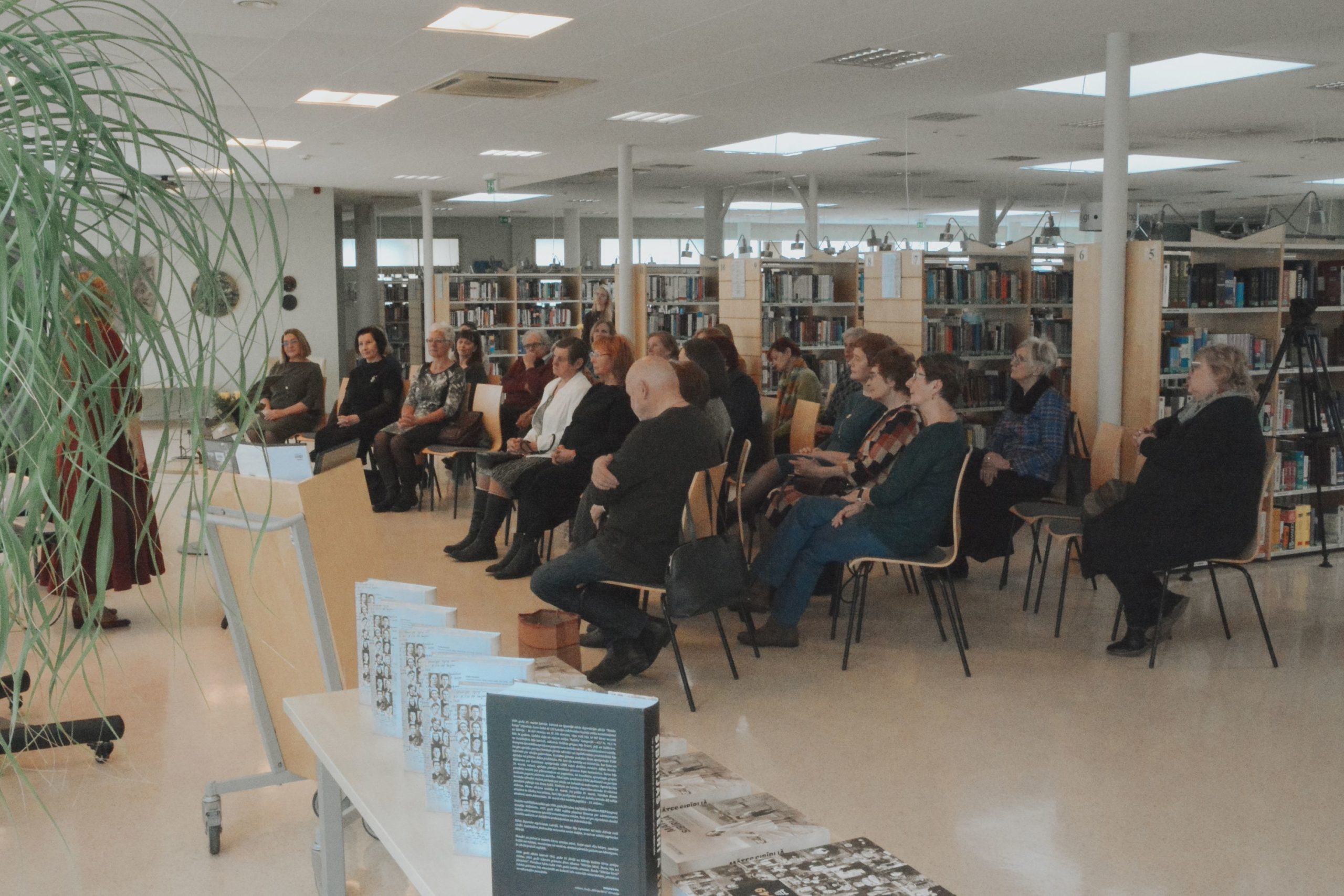
March 25 is coming. We are remembering March 25, 1949, when 42,125 of inhabitants were deported from Latvia. 10,987 of them were children under the age of 16. In 2022, the foundation published the book “Children of Siberia 1949”, which contains the life stories of 165 people who were taken to Siberia as children on March 25, 1949. The book contains maps of the areas, descriptions and photographs from personal archives attached to each interview. The Book can be purchased by ordering on the foundation’s website https://sibirijasberni.lv/shop/product/sibirijas-berni-1949/ or by calling +371 2 8643979.

This slideshow requires JavaScript.

The new book “Mothers in Siberia” turns out to be relevant in connection with the war in Ukraine

The book “Mothers in Siberia” has become popular in a short time, there is no doubt that it will soon become a bibliographic rarity, just like “School in Siberia”. History repeats itself – the war in Ukraine, the forced flow of refugees and the violent deportation of people to the outskirts of Russia turn out to be a modern reality. Thanks to everyone who promotes and  buys a book, promoting the work of the foundation. On Monday, January 10, an interview with Dzintra Geka “Morning Panorama” is expected on LTV1.

Continue reading “The new book “Mothers in Siberia” turns out to be relevant in connection with the war in Ukraine”

Siberian Children’s Christmas

On December 22, 2022, the Siberian Children’s Christmas and opening of the book “Mothers in Siberia” was held at the Latvian Society House. About 60 people had arrived. Dzintra Geka performed, Jānis Lūriņš read excerpts from the book and Pastor Gunārs Kalme gave a speech. Musicians Raimonds Tiguls – henga, Magdalēna Geka – violin and Jānis Lūmanis – accordion performed. Continue reading “Siberian Children’s Christmas”

New book “Mothers in Siberia” – in eternal memory of Latvian Mothers.

Foundation “The Children of Siberia” has published a new book “Mothers in Siberia”. The book contains interviews with mothers and their children deported on June 14, 1941, fragments of interviews from the memories of children deported on June 14, 1941. In 1941, the children taken to Siberia asked me to publish a book about Mothers. Latvian women, who from a prosperous life, from a prosperous home, ended up in the filth, filth, narrowness, hunger, and cold of Siberia. In chiffon dresses, mothers went to cut trees in the taiga, returning to their huts in the evening with worn-out clothes. Mothers gave the meager ration of bread to their children and starved to death. On June 14, 1941, 15,424 Latvian residents were deported from Latvia. Deportation greatly affected women – being separated from their husbands, taking all care of children, parents. They had to fight for physical survival with all possible means, far away from the usual environment, raise children, be able to create a sense of family, survive many physical and moral hardships. suffering – loss of husband, also children. Research by psychologists shows that the traumas caused by deportation leave 

traces and are passed on to the next generation.
In 1946, when orphaned children were allowed to be sent to Latvia, some mothers committed suicide so that the children could return to their homeland. In 2000, when we started looking for and interviewing Siberian children, we still met some mothers, this book contains their memories. What surprised me the most was the suffering, the pain that had been experienced and was able to remember it without bitterness and malice.
More than 80 years have passed, memories are fading, time is running and there are calls to forget it sooner. Then suddenly war in Ukraine. History repeats itself, fathers have been killed, families destroyed, children deported again. That is why this book is needed. Lest we ever forget…
Eternal memory for Latvian Mothers.”

Māra Eidukas (quote from the book) “Mum was working in the forest, she left this food for us, but it happened that other children ate our food. I got sick… For a month, on my way to work, my mother waited in terror to see if I would be alive when she came home from work. Mom said – it’s better if misfortune comes without knowing, because it’s terrible to go through it. I’m sick from hunger”
Hélène Lacone (quote from the book): “I was 34 years old when I was deported. I work in a collective farm, digging a cellar. There were older wives. I dug up a lot of earth, on the third day I only worked in the corner with a shovel, I was sick. I wanted to earn. We were given a ration of bread. There was a hospital nearby, I went in for treatment. I was investigated. I was all messed up. I wasn’t allowed to do hard work anymore”
Margrieta Silenieks(Otaņķe) (quote from the book): “We believed that we would be together with our husbands. We saw that there were no husbands when we left… We asked, of course , but the communists had their own answer – they didn’t know where our men were.”

The book is published by “Children of Siberia Foundation”, it can be purchased by ordering on the website  https://sibirijasberni.lv/shop/product/mates-sibirija/  or by phone 28647939, we also send by mail and to your home. The book can also be purchased on site at the studio in Zaķusala, LTV building, tel. 28647939 or 29273016.

Road to Siberia, 1941

The film “Road to Siberia, 1941” is an emotional and sad message. It tells about people who return to the places of deportation in Siberia, Yeniseysk, Karaula, Ustjport, Biriliyus, Suhanoy, Penkov. How does it look now? How are these people welcomed and what do the local people in Siberia think? “Don’t forget, don’t betray, don’t forgive in our name,” – so say the children of Siberia.
(c) StudioSB. Latvia, 2021.
Director: Dzintra Geka.
Text author: Valdis Lūriņš.
Cinematographer: Aivars Lubanietis.
Composer: Pēteris Vasks.

The distant land of Siberia. Born there.

We present to your attention the 2022 film “The distant land of Siberia. Born there.”

Continue reading “The distant land of Siberia. Born there.”

The distant land of Siberia Why March 25, 1949?

The film “The distant land of Siberia Why March 25, 1949?” now is available with English subtitles. The film was shown on Latvian Television 1 on March 25, 2021.

Continue reading “The distant land of Siberia Why March 25, 1949?”

Discussion: What does history teach? Remember or forget?

On August 23, 2022, TV24 22:00 hosted the discussion “What does history teach? Remember or forget?”

The discussion was moderated by Sandy Semyonov. The following participated in the discussion:

  • Marija Krumiņa, deported in 1941 at the age of 9 months, spent 16 years in Siberia, still works as an eye doctor, has been on expeditions in Siberia many times, in the Krasnoyarsk region in the camp Ŗherti, her father, priest Rumba, died.
  •  Nagezda Novosjolova, born in 1949 in the camp in Igarka, daughter of exiled Laima Āriņa, mother died in Siberia, Nagezda came to Latvia in 1993, speaks Latvian poorly, because she froze to the wall of the barracks as a child and her nerves are frozen. A movie “Igarka, Hope and Butterfly” was made about Nagezda.
  •  Andris Bumbulis, born in Krasnoyarsk district in 1952, mother deported from Latvia, father Armenian, parents met in Siberia. Andris is a retired border guard captain and ready to fight for Latvia.
  •  Pastor and historian Guntis Kalme, who took part in all the expeditions, the furthest was to the northern ice ocean, Tolstij nos, where Latvians are buried, we brought a cross and a memorial plaque to Otilija Vitola.
    Fragments from the films “The Balance of Siberia” and “Igarka, Hope and Butterfly” were shown.

Events of 14 June 2022

June 14 marks the 81st anniversary of the deportations of June 14, 1941.

10:00 In the Palace of the President of Latvia, President Egils Levits met with the repressed, winners of the drawing and writing competition. The winners of the drawing and writing competition had arrived from all over Latvia as well as from France, who received cash prizes, gifts from the President’s Chancellery, the book “Siberian Children 1949”, as well as jury prizes. Singers Armands Birkens sang and played a psaltery ensemble. The jury of the drawing competition was chaired by sculptor Regīna Deičmane, the jury of the drawing competition was chaired by teacher Liveta Sprūde.

This slideshow requires JavaScript.

Photo from the President’s Photo Archive. 

15:00 at Cinema KSuns and 22:00 LTV1 could watch the documentary film from the cycle “Far Land Siberia. Born There ” can be watched on the LSM portal

18:00 A concert for Deportees took place in Old st. Gertrude Church, the Latvian Radio Choir sang, Kristīne Adamaite, organist, soloist Jānis Kurševs, musicians performed compositions by Latvian composers (J. Ivanovs, L. Garūta, P. Vasks, etc.)

Results of the 2022 essay competition

The number of works submitted for the 2022 competition is indeed a considerable total of 439
paintings and drawings for all age groups. Undoubtedly, students, teachers, including parents,
who have promoted the involvement of children and young people, go deep into the difficult
topics of Latvia’s history. In the continuous and inexhaustible flow of information, it is important
that someone is able to speak more deeply. Looking at the works of children and young people,
it is impossible not to think about the reality that we are all “breathing in the back of our head”
today, in the context of the Russian invasion of Ukraine and its consequences. It remains
almost physically unfortunate, noticing a frighteningly similar episode, a situation embedded in
the drawing that seems to have just been seen in one of the current news channels.
Even as adults, it is impossible for us to step out to distance ourselves and try to grasp what is
happening so fast. What happens to children, in the minds of very young people, when they
begin to notice a certain “repetition of history” in a geographical area close to them, we can
only guess. The members of the jury are also just people. People who are most addressed in
children’s work by direct emotionality, a confident handwriting and a composition whose
persuasiveness lies in the true desire to tell the “Siberian story” more clearly. When evaluating
the works not for the first year, it must be repeatedly admitted that the works submitted by the
youngest and middle group children are the most disarming. There, the participant has not yet
been overwhelmed by the paralyzing fear of drawing a “wrong” hand, foot or nose, but the main
thing is to feel the “skin” of the event, which opens a living expression. A child’s talent (and
well, if delicately guided by a skilled teacher) then allows for stroke dynamics, saturated active
or restrained coloring – depending on intent. Imaginations created by the imagination of events
that
have come to this day through the stories of eyewitnesses. The children of the older group,
who are naturally expected to have both a more thorough understanding of history and a more
mature focus on the technical performance of their work, can no longer “get through” with the

naive directness of childhood. Painting and graphics also demonstrate not only the
management of means of expression but also thinking. Therefore, the jury is pleased to find a
rather rare, but noteworthy, original view of the topic each time.
The competition is a competition, it highlights the brightest examples, but it should be borne in
mind that behind each of the other works there is a certain young person who has for some
time hindered his or her thoughts on a topic important to the Latvian nation. Probably thinking
about where we come from and where we go.

Ieva Jurjāne, artist

2022 essay competition for students
“Children of Siberia 1941/1949 – Children of Exile 1944”
RESULTS

Winners of the 2022 composition competition
Group 1
1st place. Nellija Tiesnese
2nd place. Elizabete Mieze
3rd place. Elizabeth Vasilyeva

Group 2
1st place. Linda Kalniņa
2nd place. Marianna Laime-Babre
3rd place. Paula Bička

Group 3
1st place. Denise Marta Medinika
2nd place. Klaudija Dembovska
3rd place. Anna Jansone

Special awards
Dzintra Geka-Vaska – Gabriela Misiņa, Emīlija Gūtmane
Ina Druviete – Ilya Alexeyenko
Kaspars Pūce – Amanda Blūma, Līga Zaremba, Evelīna Paula Ķerķe
Aivars Ozoliņš – Ance Luīze Bumbiere, Dita Hadaņonoka
Elita Veidemane – Rēzija Romanovska, Elīza Kurcalte
Valdis Lūriņš – Emīls Zandersons, Loreta Lazdiņa
Undine Adamaite – Eva Evelina Klavina
Liveta Sprūde-Kalme – Everita Lapeško, Alina Maškovska